-

-
Like what you see?
LetsTalkUrl
Let's Talk


Public sector organizations are modernizing services with cloud, data, and digital platforms. As that transformation expands, many organizations are choosing multi-cloud environments to improve resilience, reduce dependence on a single provider, and align workloads to security and compliance requirements.
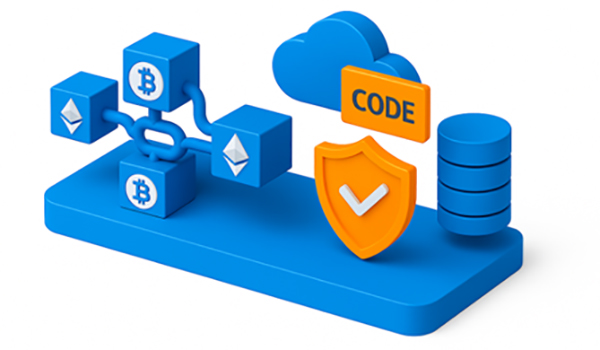
At the same time, multi-cloud environments can make it harder to maintain consistent records, coordinate processes across agencies, and enforce common controls. Blockchain can help address these challenges when used in the right business context. It can create a shared, tamper-resistant record of transactions, improve transparency, and support trusted collaboration across distributed environments.
For public sector organizations, the opportunity is not simply to add another technology layer. It is to apply blockchain selectively where trust, traceability, and multi-party coordination matter most.
Multi-cloud strategies allow agencies to use the strengths of different cloud platforms while supporting workload portability and operational flexibility. However, they can also introduce fragmentation across data, workflows, identities, and governance models.
Blockchain can help by providing:
By linking these capabilities with multi-cloud architecture, agencies can improve data integrity, accountability, and coordination without relying on a single system of control.
Infosys Public Services takes a modular, cloud-agnostic view of blockchain adoption. The goal is to help agencies integrate blockchain capabilities into existing cloud environments in a practical and governed way rather than treating blockchain as a stand-alone platform.
Permissioned blockchain networks
Support controlled participation, stronger governance, and better scalability for regulated public sector environments.
Interoperability layers
Enable communication across cloud platforms, systems, and agency boundaries.
Smart contract libraries
Support repeatable business rules for use cases such as approvals, entitlements, and cross-agency data exchange.
Identity and access integration
Connect blockchain-enabled workflows with identity and access management (IAM) controls for secure onboarding and role-based access.
Any blockchain strategy should also align with applicable governance and compliance requirements. That includes standards and frameworks such as the National Institute of Standards and Technology (NIST), the Federal Risk and Authorization Management Program (FedRAMP), and, where relevant, the General Data Protection Regulation (GDPR).
1. Inter-agency data sharing
Many government programs require agencies to share citizen information to deliver connected services. In a multi-cloud environment, that can be slowed by data silos, inconsistent permissions, and limited visibility into how information is used. A permissioned blockchain model can create a shared record of transactions and access events while allowing each participating agency to retain operational control of its environment.
Potential benefits include:
2. Digital identity verification for public benefits
Identity verification often spans multiple systems, agencies, and cloud platforms. Traditional centralized models can create bottlenecks and increase risk when records must be validated across disconnected environments. Blockchain-based identity approaches, used with strong governance and appropriate privacy controls, can support trusted verification across platforms while reducing manual steps.
Potential benefits include:
As agencies continue to modernize legacy systems and expand digital services, they need architectures that support collaboration without compromising control. Blockchain will not fit every workload, and it should not be treated as a universal answer. But in multi-party environments where trust, traceability, and policy enforcement are critical, it can play a meaningful role in a broader modernization strategy.
Blockchain adoption in multi-cloud environments is less about technology novelty and more about solving trust and coordination challenges at scale. For public sector agencies, the value lies in using blockchain where it can improve transparency, strengthen governance, and support secure collaboration across distributed systems. Infosys Public Services helps organizations assess where these capabilities fit and how to implement them in a way that is practical, secure, and aligned to mission outcomes.
What is blockchain in a multi-cloud environment?
Blockchain in a multi-cloud environment is the use of distributed ledger technology to maintain trusted, tamper-resistant records and workflows across more than one cloud platform.
Why is blockchain useful for public sector agencies?
Blockchain can help public sector agencies improve transparency, support secure data sharing, strengthen auditability, and coordinate processes across multiple organizations and systems.
How does blockchain improve multi-cloud operations?
Blockchain can improve multi-cloud operations by creating a shared source of transaction history, supporting trusted interoperability, and automating selected business rules through smart contracts.
What are common public sector blockchain use cases?
Common use cases include inter-agency data sharing, identity verification, document traceability, and program administration where multiple parties need trusted records and governed access.

Ajay Kumar is a seasoned technology leader with over 24 years of experience driving large-scale digital transformation initiatives, from initial project implementation to final system integration and enterprise architecture. As principal Technology Architect at Infosys Public Services, he leads the Cloud and Infrastructure practice and is instrumental in helping clients modernize their technology landscapes.
Mr. Kumar is known for his strategic vision and collaborative leadership. Ajay excels at aligning complex business objectives with innovative technical solutions. He has a proven track record of spearheading programs that leverage agile methodologies, digital experience platforms, and cloud technologies to foster business innovation.
He is passionate about mentoring and guiding teams, actively sharing his insights on emerging technology trends to build a culture of continuous learning and excellence.

